Start with the pattern, not a guess
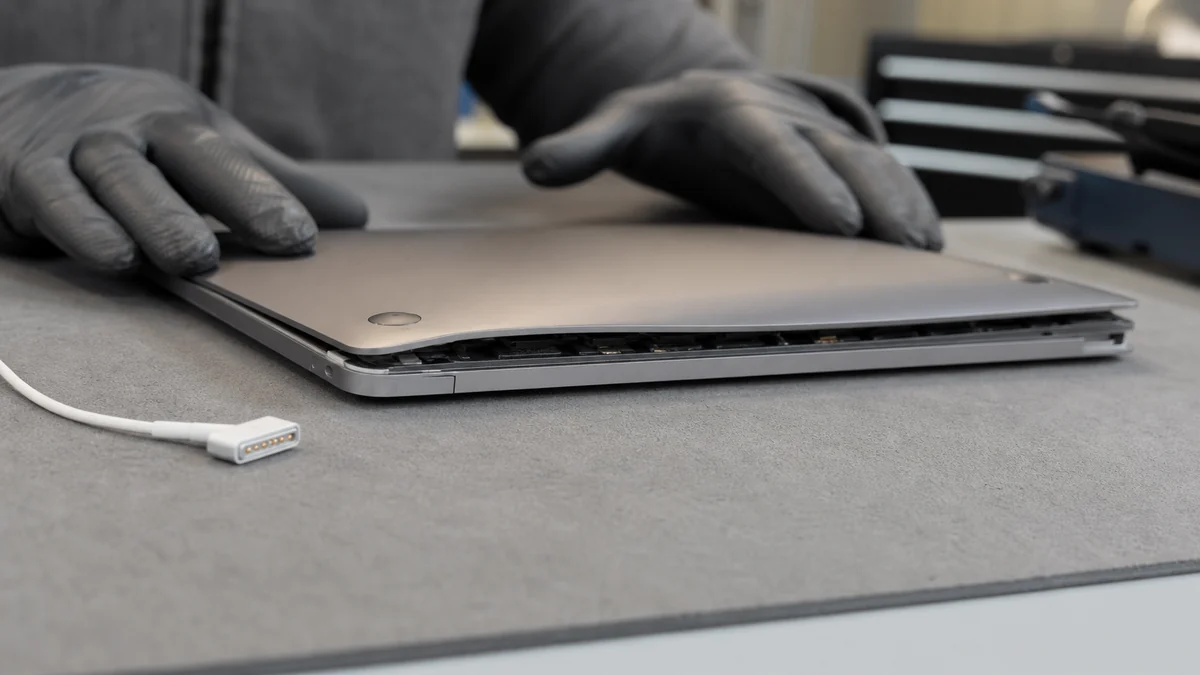
A swollen battery is a physical safety problem, not a calibration issue. Stop charging and using the laptop, do not press the case closed or puncture the cell, and keep the device away from heat and combustible material while arranging safe handling. Data recovery or battery replacement can be discussed after the equipment is no longer being stressed.
Practical checks and decisions
Work from observation to one controlled change at a time. Stop when the next step could risk data, accounts, electrical safety, or additional hardware damage.
Shut down and unplug the laptop
Record the exact model, charger, indicator lights, battery behavior, temperature, and whether the symptom changes when the lid or connector moves. Model-specific construction and parts affect the repair path.
Do not press, puncture, bend, or continue charging the battery
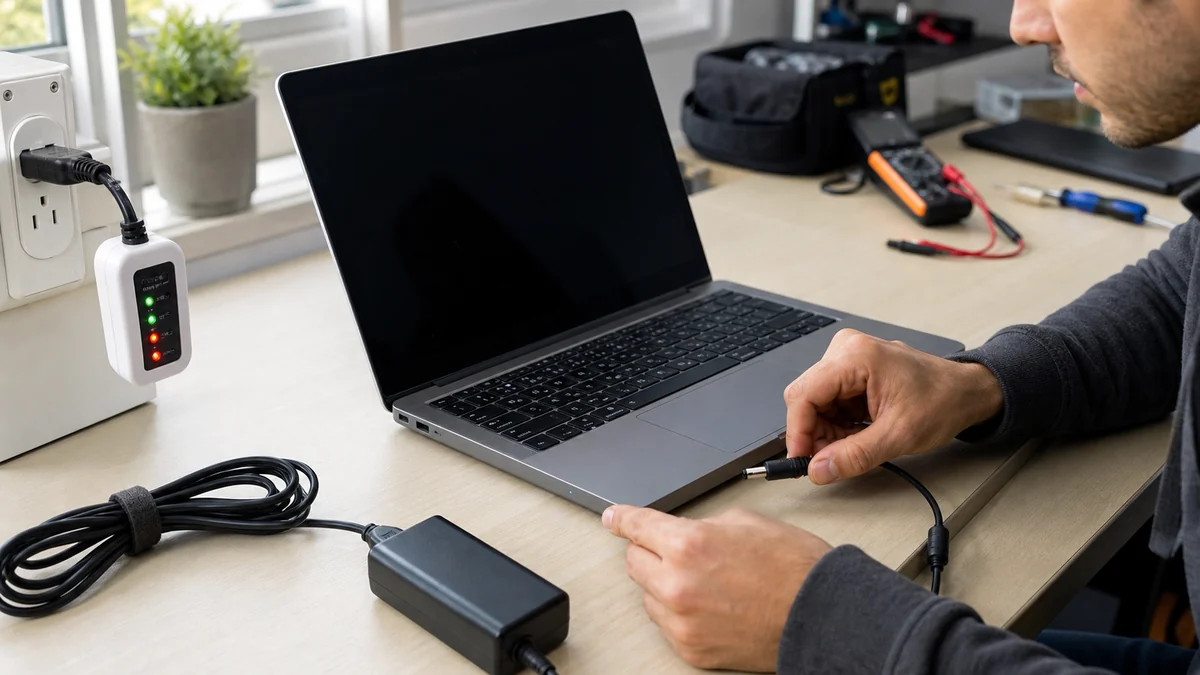
Use one known-good outlet and the correct compatible adapter when it is safe. Do not keep flexing a loose charging plug or hinge; movement that briefly restores operation is useful evidence of physical damage.
Keep the device away from heat and combustible clutter
Power down immediately for battery swelling, unusual heat, odor, liquid, exposed glass, or case separation. Do not press a swollen case closed or continue charging to see whether it improves.
Arrange model-appropriate removal and responsible battery disposal
Protect important files before resets, storage work, or repeated startup attempts. Compare the complete repair—including parts and hidden-damage risk—with a suitable replacement.
When a professional diagnosis makes sense
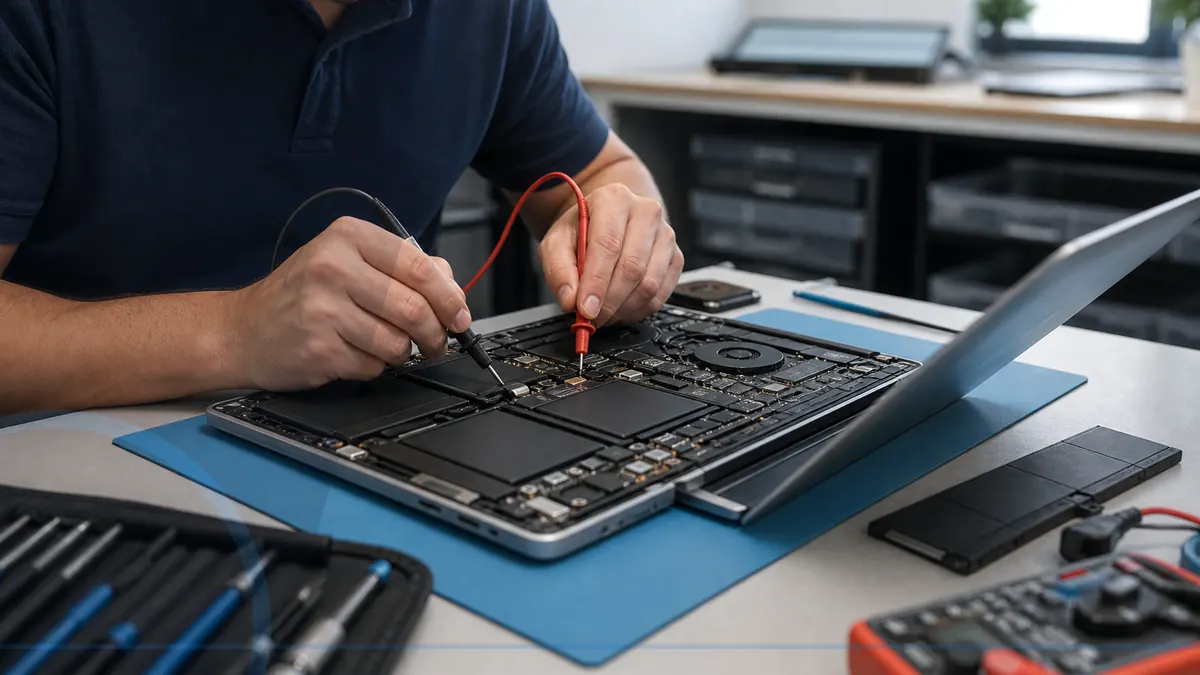
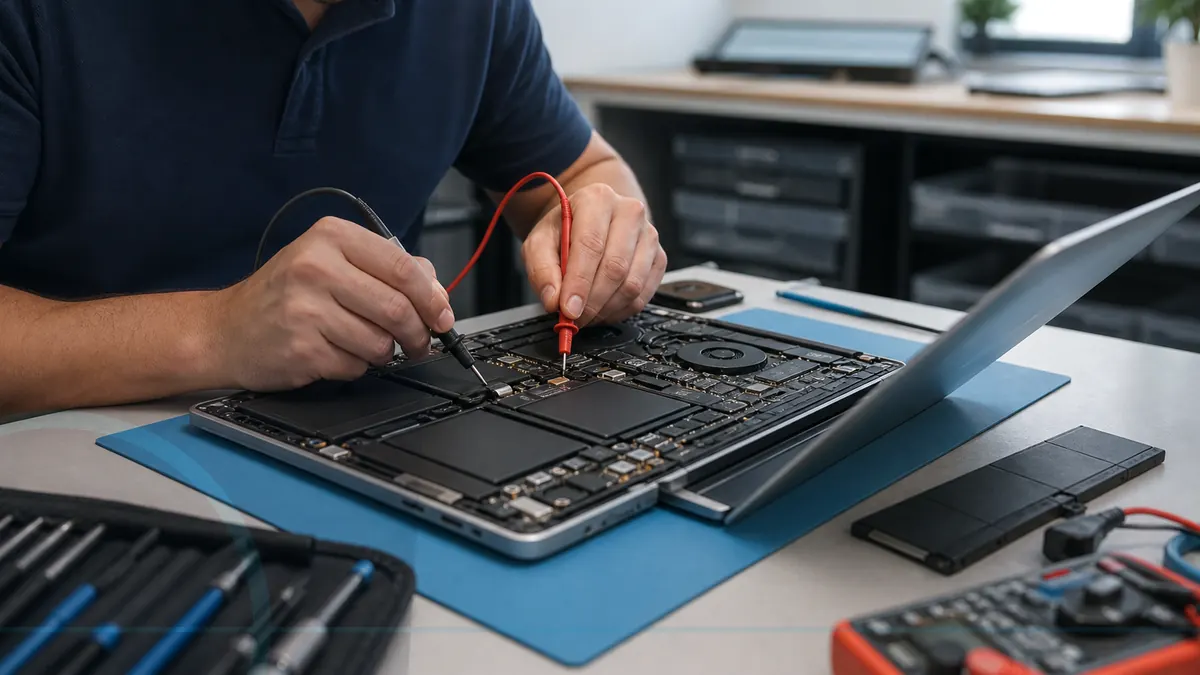
Arrange diagnosis when charging, display, hinge, heat, battery, or startup symptoms return; when the case or battery is physically unsafe; or when model-specific parts and hidden damage must be evaluated. Bring the correct power adapter and the exact model information.
For hands-on or remote help, explore the service options related to this issue, or browse the Help Center for another guide.