Start with the pattern, not a guess
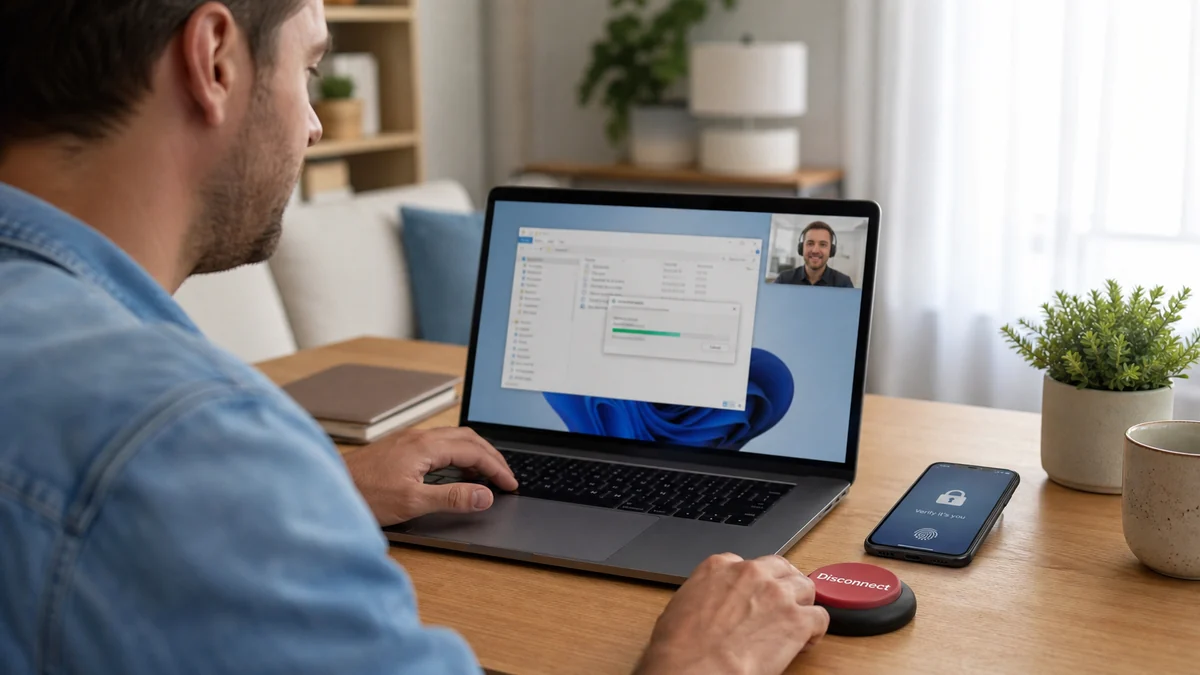
Only start remote support through a contact you initiated and verified. Confirm the purpose of the session, watch the work when practical, and end access when the agreed task is complete.
Practical checks and decisions
Work from observation to one controlled change at a time. Stop when the next step could risk data, accounts, electrical safety, or additional hardware damage.
Confirm you initiated contact with the real business
Use remote support only after you initiate contact through a verified business channel. Confirm the technician, purpose, device, expected session, and payment terms before granting access.
Expect a session code or explicit approval
Expect a visible approval step or one-time session code. Stay available during the work unless another arrangement is documented, and never provide banking passwords or one-time verification codes.
Stay available during the session unless another arrangement is documented
Remote support can address many software, setup, update, and account concerns, but it cannot physically repair damaged ports, failed storage, swollen batteries, or no-power hardware.
Remove one-time access tools or confirm ongoing tools after the work
When the agreed work is complete, end the session and confirm whether the tool was one-time or intentionally persistent. Ask for a plain-English summary of changes and next steps.
When a professional diagnosis makes sense
Choose hands-on service when the device has no power, physical damage, failing storage, unsafe heat, a damaged port, or another condition that remote access cannot address. End any remote session immediately if the identity or purpose becomes unclear.
For hands-on or remote help, explore the service options related to this issue, or browse the Help Center for another guide.