Start with the pattern, not a guess
Treat the home office as a small operating environment, not simply another personal computer. List the applications that earn revenue, the people and vendors who can access them, the location of client files, and the maximum tolerable downtime. Then document who handles the internet connection, computer repair, cloud accounts, backups, and employer- or client-required security so an outage does not become a search for ownership.
Practical checks and decisions
Work from observation to one controlled change at a time. Stop when the next step could risk data, accounts, electrical safety, or additional hardware damage.
Use multifactor authentication for work and financial accounts
Start with supported software, current updates, protected primary email, unique passwords, multifactor authentication, and a tested backup. These layers reduce common risk without promising complete prevention.
Keep the computer, browser, router, and applications updated
Confirm settings through the operating system, app, or provider you normally use. Do not follow an unexpected message to a login page, download, phone number, or verification request.
Back up permitted work and personal data appropriately
Document alerts, affected accounts, devices, and recent changes before clearing messages or installing tools. Use a separate trusted device when account access may already be exposed.
Know who to contact before a suspicious event becomes downtime
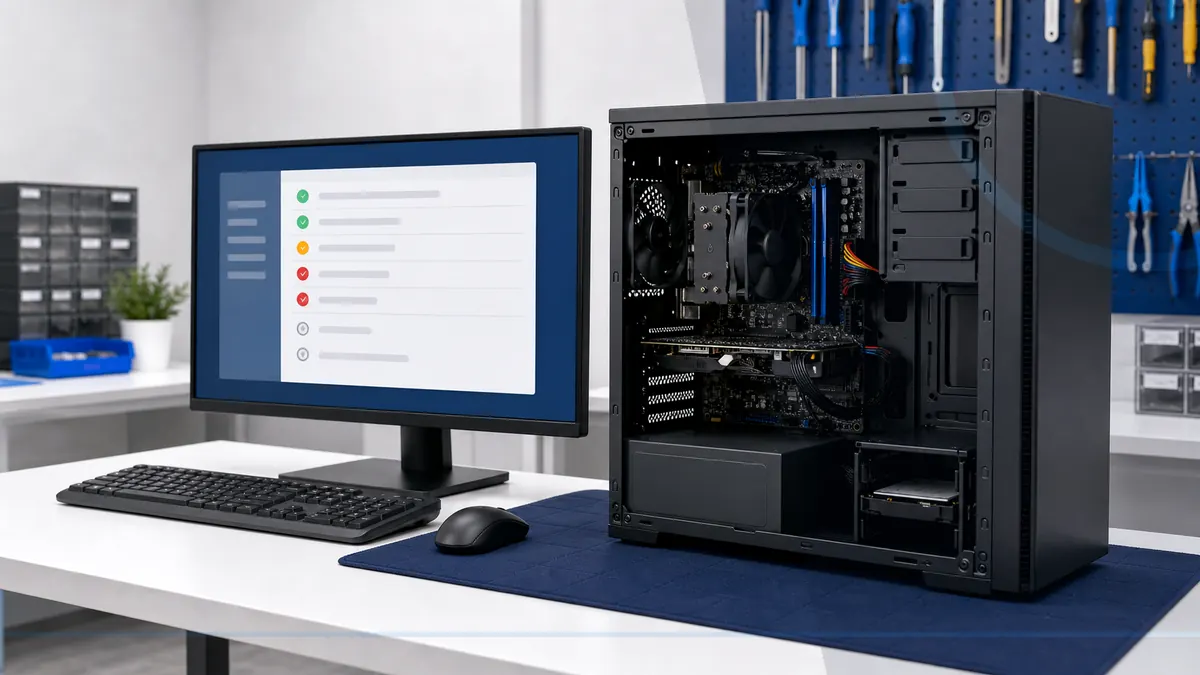
Review the result over time rather than trusting one green status icon. Monitoring and human follow-up improve visibility, while backups and careful user decisions remain necessary.
When a professional diagnosis makes sense
Ask for help when an alert cannot be verified, important account access changes unexpectedly, protection will not update, or a household needs a repeatable monitoring and backup plan. Bring the exact message and identify which devices and accounts are involved.
For hands-on or remote help, explore the service options related to this issue, or browse the Help Center for another guide.